
The Real Truth About Genius Childcare
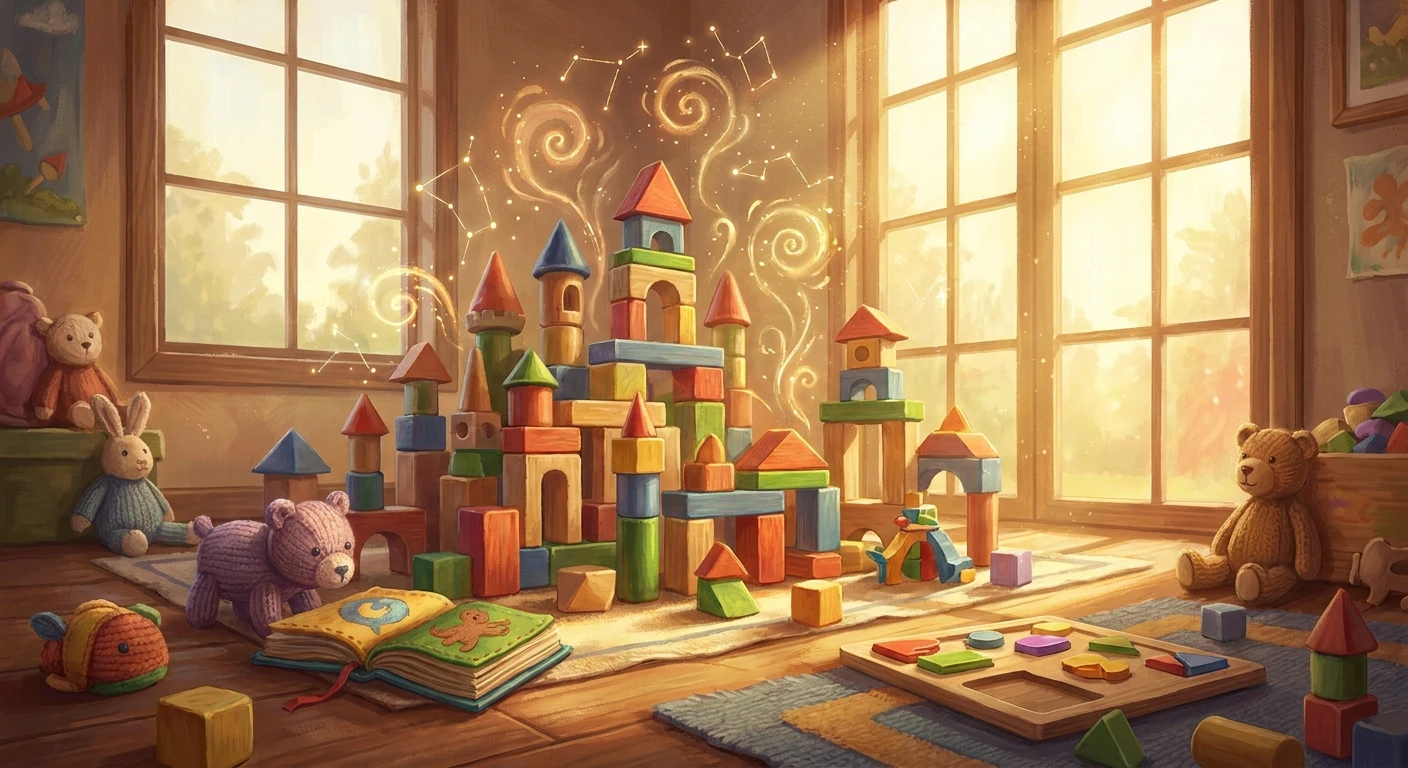
Look, if you are pulling your hair out trying to figure out genius childcare, you are absolutely not alone. Raising a tiny human is hard enough without the constant pressure to turn them into the next Einstein before they can even tie their shoes. My thesis is simple: true cognitive development happens through play, not pressure. As someone who lived in Kyiv for years before relocating, I vividly remember trying to find the perfect early development group for my little one. It felt like solving a thousand-piece puzzle with half the pieces missing. I kept hearing about these prodigy-making centers, but what does that even mean? I had a neighbor back in Ukraine, Oksana, who tried forcing her three-year-old to read flashcards for hours every single day. Complete disaster. The kid was stressed, she was stressed, and nobody was learning anything. Once she switched to child-led exploration, everything shifted. Her kid naturally started recognizing letters while playing with wooden blocks on the living room floor. That is the real magic we are talking about. Now that we are navigating 2026, the obsession with strict academic preschools has finally started to fade, making room for methods that actually respect a child’s natural brain development. We are shifting from forced academics to natural, brain-friendly environments that build lifelong curiosity.
Core Benefits: Why This Approach Actually Works
When you start implementing proper cognitive routines, the benefits go way beyond just knowing the alphabet early. The value proposition here is massive: you are building a resilient, adaptable brain capable of solving complex problems. Think about it. When a kid plays with open-ended materials, they are doing engineering, physics, and emotional regulation all at once. Let me give you two quick examples. Example one: when a toddler builds a tower and it collapses, they learn physics and emotional resilience. Example two: when they sort buttons by color, they are building the foundational logic needed for advanced mathematics. It is not just about keeping them busy; it is about active brain wiring.
| Method | Cognitive Benefit | Real-World Example |
|---|---|---|
| Open-Ended Play | Boosts problem-solving and spatial awareness | Building forts with sofa cushions |
| Sensory Bins | Enhances fine motor skills and tactile processing | Digging for toys in kinetic sand |
| Child-Led Reading | Develops intrinsic motivation and vocabulary | Letting the child pick the bedtime story |
To really nail this routine at home, you need to follow a few core principles. These are non-negotiable if you want to see actual results without burning out your kid.
- Follow their interests: If they are obsessed with bugs right now, use bugs to teach counting, colors, and empathy.
- Allow for boredom: Boredom is the birthplace of imagination. Do not schedule every single minute of their day.
- Focus on the process, not the product: Praise their effort in drawing a messy circle rather than demanding a perfect picture.
- Maintain emotional safety: A stressed brain simply cannot learn. Prioritize connection over correction.
Origins of Early Development
To understand how we got here, we have to look back at where early education started. Over a century ago, pioneers completely flipped the script on how society viewed kids. Before that, children were essentially treated like tiny adults who just needed to be disciplined and filled with facts. The earliest models of what we might call progressive education realized that kids learn through their hands. They realized that movement and physical touch were deeply connected to cognitive growth. The origins of prioritizing the child’s autonomy changed everything. It was the first time educators stepped back and said, hey, maybe the kid actually knows what they need to learn right now.
Evolution of Cognitive Play
As the decades rolled on, things got a bit messy. The mid-twentieth century brought a huge wave of intense academic pressure. Suddenly, there was a global race to produce the smartest kids, leading to rote memorization and endless drilling. Society forgot the foundational lessons of the early pioneers. Parents were buying aggressive educational tapes and forcing toddlers to sit at desks. This evolution into high-stress early schooling actually backfired. Studies began showing higher rates of anxiety and lower rates of creative thinking in children who were pushed too hard, too fast. We essentially spent fifty years trying to industrialize childhood, completely ignoring how the human brain actually processes information.
Modern State of Early Education
Thankfully, the modern state of early education has course-corrected. As we sit here in 2026, the consensus among experts is clear: play is the work of the child. We now have the brain-imaging technology to prove what those early pioneers guessed intuitively. The best preschools and home environments look like organized chaos. They feature natural light, wooden toys, messy art stations, and very few rigid schedules. The focus has shifted to emotional intelligence, adaptability, and executive function. We are no longer trying to build compliant test-takers; we are trying to raise innovative thinkers who can navigate an unpredictable future.
Neuroplasticity Made Simple
Let us talk about the science, because understanding this changes how you parent. Neuroplasticity is just a fancy word for the brain’s ability to change, reorganize, and grow new connections. In the first five years of life, a child’s brain is basically a sponge on overdrive. Every single experience, whether it is smelling a flower or hearing a dog bark, creates a physical connection in the brain called a synapse. When you repeat an experience, that connection gets stronger, wrapped in a fatty substance called myelin. Think of myelin as the insulation on an internet cable; it makes the signal travel faster. By creating a rich, low-stress environment, you are essentially upgrading your child’s mental bandwidth. You do not need to be a neuroscientist to do this; you just need to provide varied, positive experiences.
The Dopamine Loop in Learning
The second scientific piece is the dopamine loop. Dopamine is the chemical reward your brain releases when you achieve something or figure something out. When a child solves a puzzle on their own, they get a natural hit of dopamine. This makes them want to solve harder puzzles. If you jump in and solve the puzzle for them, you steal their dopamine. You literally rob them of the chemical motivation to keep trying.
- A child’s brain creates over one million new neural connections every single second in the first few years of life.
- Cortisol, the stress hormone, actively blocks the brain’s ability to form long-term memories, which is why yelling during homework never works.
- Active physical movement increases blood flow to the brain, drastically improving focus and information retention.
- Sleep is when the brain actually consolidates what it learned during the day; skipping naps severely harms cognitive processing.
Day 1: Audit the Environment
The very first step is to fix your physical space. Walk through your living area and drastically reduce the visual clutter. Pack away half the toys. When kids have too many options, they experience decision fatigue and end up playing with nothing. Leave out a few high-quality, open-ended items like blocks, animal figures, and art supplies. Rotate the hidden toys back in every few weeks to keep things fresh. A clean, curated environment immediately reduces anxiety for both you and your child.
Day 2: Introduce Open-Ended Play
Today is all about letting them lead. Set up a simple invitation to play. Maybe put some toy cars in a tray of flour, or stack a few blocks on a rug. Then, step back and say absolutely nothing. Let them discover it. Do not tell them how to play with it. If they want to pretend the blocks are food for the cars, go with it. Your goal today is just to observe and support their imagination without controlling the narrative.
Day 3: Emotional Labeling
Genius is not just about math; it is about emotional intelligence. Today, focus entirely on naming feelings. When they are frustrated that a tower fell, say, “I see you are really frustrated right now because that fell down.” Validating their feelings builds the neural pathways for emotional regulation. A kid who can manage their frustration is a kid who can sit down and focus on a complex task later in life.
Day 4: Sensory Immersion
Kids need to touch, smell, and hear the world to understand it. Set up a sensory station. It can be as simple as filling the sink with warm water and letting them wash plastic dishes, or making a batch of homemade playdough. Sensory play builds nerve connections in the brain’s pathways, which leads to the child’s ability to complete more complex learning tasks. Let them get messy today; the cleanup is worth the brain development.
Day 5: Unstructured Nature Time
Get outside, no matter the weather. Nature provides the ultimate sensory experience without the overwhelming artificial lights and sounds of indoor toys. Let them pick up sticks, stare at bugs, and jump in puddles. Uneven terrain builds core strength and balance, which are surprisingly linked to the ability to sit still and focus in a classroom setting later on.
Day 6: Musical Patterns
Music is basically math that you can hear. Spend day six focusing on rhythm and sound. Bang on pots and pans, sing songs with repetitive structures, and dance around the living room. Recognizing musical patterns helps the brain develop the spatial-temporal reasoning needed for complex mathematics and logic puzzles. Plus, it is a fantastic way to burn off afternoon energy.
Day 7: Reflect and Adjust
Take a breath and look back at the week. What activities did your kid naturally gravitate toward? What caused meltdowns? Use this day to adjust your strategy. The goal is not perfection. The goal is establishing a rhythm that feels good for your specific family. Parenting is an ongoing experiment, so give yourself grace and tweak the routine as needed.
Myths vs. Reality
Myth: You need expensive, battery-operated educational toys to make your kid smart.
Reality: Battery-operated toys do the playing for the child. A cardboard box and some markers require the brain to do the heavy lifting, which builds far more cognitive pathways.
Myth: Flashcards create geniuses.
Reality: Flashcards train rote memorization, not deep understanding or critical thinking. Kids learn concepts much faster through three-dimensional, hands-on experiences.
Myth: Boredom is bad and means you are failing as a parent.
Reality: Boredom is a vital catalyst for creativity. When a kid is bored, their brain is forced to invent new games and stories, which is crucial for independent thought.
Myth: They need to read by age four to be successful.
Reality: Early reading has absolutely no correlation with long-term academic success. Many highly successful education systems globally do not even teach reading until age seven.
What is the best age to start these methods?
Literally from birth. You can start talking to your baby, narrating your day, and providing high-contrast visual stimuli on day one.
How much screen time is actually okay?
Experts recommend zero screen time before age two, and highly curated, interactive, co-viewed content for older toddlers. Limits are your friend here.
Do I need to buy a specific curriculum?
Absolutely not. The best curriculum is daily life. Cooking together, folding laundry, and walking around the neighborhood provide endless learning opportunities.
What if my child hates independent play?
Independent play is a muscle. Start with just five minutes of you sitting nearby reading a book while they play, and slowly increase the time over a few weeks.
Are educational apps helpful?
They can be a tool for parents who need a break, but they do not replace physical, tactile learning. Use them sparingly as a backup, not a primary teaching method.
How do I handle grandparents who push flashcards?
Set polite but firm boundaries. Explain that you are focusing on play-based learning and suggest they read a story or build a puzzle with the kid instead.
Is it too late to start if my kid is already four?
Never. The brain remains incredibly plastic throughout childhood. Just start transitioning slowly to more open-ended, child-led activities today.
Final Thoughts on Raising Brilliant Kids
Raising a sharp, adaptable child does not require a Ph.D. in education or a massive bank account. It requires patience, presence, and a willingness to let them get a little messy. By trusting their natural curiosity and building a supportive environment, you are doing more for their brain than any expensive preschool ever could. Stop stressing over the milestones and start enjoying the messy, loud, beautiful process of learning together. Ready to overhaul your playroom? Grab a trash bag, clear out the clutter right now, and watch your child’s imagination absolutely explode!