
Expert Tactics: How to Identify a Funnel Web Hole
Listen, knowing exactly how to identify a funnel web hole might sound like a highly specific survival skill, but it is an absolute game-changer if you travel or live in areas prone to these notorious eight-legged neighbors. I was recently chatting on a video call with a close friend who recently moved from Kyiv to the outskirts of Sydney. She was absolutely frantic about her backyard. Coming from Ukraine, where our biggest arachnid worry usually involves just sweeping up harmless, dusty cobwebs in a summer dacha, having to deal with potentially dangerous wildlife right on your back porch feels like landing on another planet entirely. She pointed her camera at a suspicious burrow in the dirt, asked me directly what to look for, and it struck me that a simple, clear, no-nonsense guide could save a massive amount of anxiety.
The main premise here is incredibly straightforward: recognizing the distinct, unique architecture of these burrows gives you the power to protect your family, your curious kids, and your pets without succumbing to unnecessary panic. As we navigate our way through 2026, shifting global weather patterns and rising temperatures are subtly altering insect and arachnid habitats all over the map, making this kind of practical environmental knowledge even more critical than before. So, let me walk you through exactly what these thick, silk-lined tunnels look like out in the wild, where you are most likely to find them lurking, and why spotting them early is your absolute best defense against a nasty surprise.
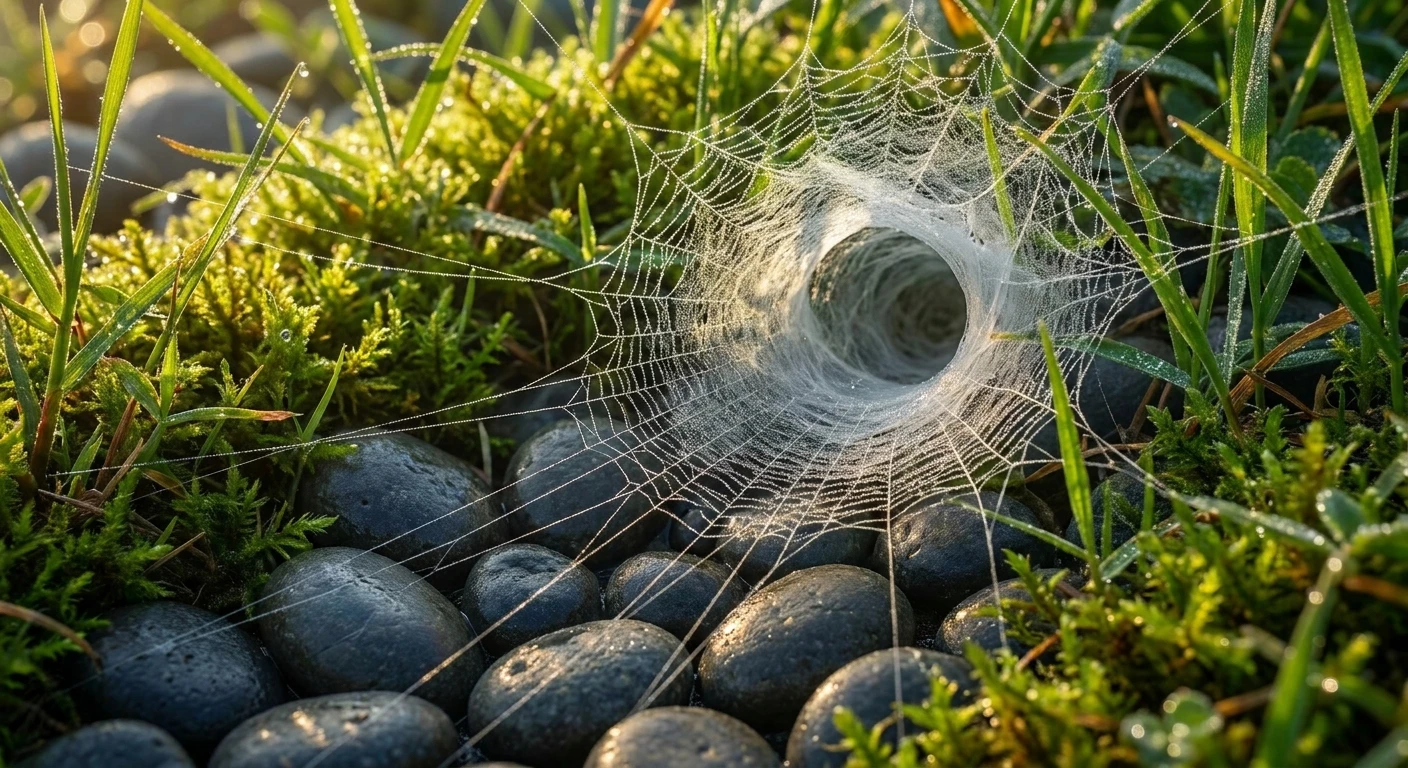
When you step out into your garden for a relaxing weekend of landscaping, the last thing you want is an unexpected, adrenaline-pumping encounter. Understanding the structural differences of various spider burrows helps you assess the risk level of your yard instantly. A genuine funnel web burrow is an architectural marvel built strictly for ambush, heavily lined with thick, trip-wire-like silk radiating outward from the entrance. Spotting this specific structural design brings immense, practical value to your daily routine. For example, if you are moving old firewood or clearing out dead leaves, knowing these visual signs prevents accidental bites entirely. Another prime example is pet safety; dogs absolutely love sniffing around damp, dark corners where these particular spiders thrive. If you can confidently spot the web, you can quickly steer your curious puppy away from danger.
Let’s break down the exact physical markers you should be looking for when you spot a strange crevice in the soil.
| Feature Checklist | Funnel Web Burrow | Harmless Spider Hole |
|---|---|---|
| Entrance Design | Irregular thick silk collar with heavy radiating trip-lines | Open dirt hole, minimal or completely absent silk rim |
| Location Preference | Moist, sheltered spots under rotting logs or massive rocks | Open grassy lawns, exposed dry soil, sunny embankments |
| Silk Texture | Thick, bright white, highly visible like a dense woven sock | Very thin, transparent, barely noticeable to the naked eye |
To make this even easier, here are three mandatory steps to safely evaluate a suspicious hole in your yard without putting yourself at risk:
- Check the perimeter for trip-lines: Funnel webs purposefully lay down distinct, radiating threads just outside the entrance to alert them instantly of passing prey.
- Observe the silk thickness: The silk is unusually dense and bright white. If it looks like someone stuffed a thick, white cotton sock into a crack in the dirt, you need to back away.
- Look for the classic Y-shape or T-shape opening: Many of these complex burrows feature dual entrances cleverly hidden underneath large rocks or heavy, rotting logs.
Origins of the Funnel Web Spider’s Architecture
The intricate, terrifyingly efficient design of these burrows isn’t just a random accident of nature. Millions of years of intense evolutionary pressure crafted these spiders into the ultimate ground-dwelling ambush predators. The funnel shape serves a highly specific dual purpose: it acts as a remarkably sensitive vibration detector, and it provides a perfectly safe, climate-controlled retreat from larger predators and extreme weather conditions. Native primarily to damp, dense forest regions, these spiders learned over millennia to utilize rotting logs, deep leaf litter, and natural rock crevices. They weave their incredibly thick silk to stabilize loose, crumbly soil, essentially engineering a perfect microclimate that keeps their sensitive bodies hydrated even when the environment outside gets hostile.
Evolution of Human Awareness
Historically, early settlers and pioneers in spider-dense regions learned about these hidden burrows the hard way. Indigenous populations, however, possessed deep, generational knowledge of the land, recognizing exactly which environmental markers and soil types signaled immediate danger. As mass urbanization slowly expanded into these natural, ancient habitats, the geographical overlap between human dwellings and spider territories increased exponentially. Throughout the 20th century, identifying these silk-lined tubes transitioned from a niche bushman skill into a critical, everyday public safety initiative. Schools began teaching children to avoid specific types of rock piles, and community awareness campaigns started heavily emphasizing the visual markers of the webs.
The Modern State of Arachnid Identification
Fast forward to our current year, 2026, and our fundamental approach to coexisting with dangerous nature has dramatically shifted for the better. We no longer just spray dangerous chemicals indiscriminately. Instead, we heavily rely on digital community science apps, high-resolution smartphone photography, and neighborhood tracking databases to monitor spider populations. The modern ethos of arachnid identification strongly emphasizes education and safe relocation over blind eradication. Knowing exactly how to spot the burrow allows intelligent homeowners to safely modify their environment, remove debris, or call in trained professionals, rather than dumping harmful, broad-spectrum pesticides into their gardens that ultimately destroy local, beneficial ecosystems.
The Mechanics of Trip-Line Silk
Let me break down the incredible biological engineering behind this natural trap. Spider silk is essentially a highly complex proteinaceous fiber extruded directly from the spider’s spinnerets. Funnel webs produce a very specific type of dragline silk that is structurally robust, completely non-sticky, and highly tensioned. When a wandering beetle, a massive cockroach, or unfortunately, a rogue human finger brushes against these radiating lines, the mechanical energy wave travels instantaneously down the funnel structure straight to the spider’s mechanoreceptors. It is, for all intents and purposes, a sophisticated biological alarm system. The spider’s rudimentary but lightning-fast nervous system processes this specific sensory input in a matter of milliseconds, perfectly calculating the exact size, weight, and trajectory of the disturbance before making the decision to strike with staggering speed.
Understanding Burrow Microclimates
The burrow itself is not just a crude hole dug into the dirt; it is a highly engineered, climate-controlled bunker. Funnel webs are biologically highly susceptible to desiccation, meaning they can dry out and die very quickly if exposed to direct sunlight or dry air. The insanely dense silk lining acts as a highly effective moisture barrier, purposefully retaining internal humidity even during the most scorching, unrelenting summer days.
- Tensile Strength: The specialized silk used in the funnel entrance is, pound-for-pound, significantly stronger than structural steel, purposefully designed to easily withstand the violent struggling of large insect prey.
- Vibration Frequency: The external trip-lines are biologically tuned to highly specific resonance frequencies, allowing the spider to accurately differentiate between harmless wind movement and actual, edible prey.
- Hygroscopic Properties: The silk actively absorbs ambient moisture from the morning dew, ensuring the spider’s primitive respiratory system, known as book lungs, functions at absolute optimal capacity.
- Thermal Insulation: The deep vertical structure of the burrow, heavily reinforced by overlapping layers of silk, maintains a steady temperature gradient that completely protects the spider from deadly surface heat waves.
Day 1: Initial Perimeter Walk
If you genuinely suspect these spiders have moved into your garden space, here is a highly actionable, stress-free 7-day plan to safely survey and confidently manage your property. Start by casually walking your yard early in the morning when heavy dew makes any spider silk highly visible and reflective. Do not touch anything; just closely observe the base of large trees, decorative rocks, and forgotten woodpiles.
Day 2: Mapping Suspect Areas
Grab a physical notebook or just open a notes app on your phone. Carefully document the exact locations of any holes that feature those suspicious, thick white silk collars. Mapping your yard systematically helps you track if new burrows are actively appearing over time, indicating a growing local population.
Day 3: Clearing Yard Debris Safely
Before you start working, put on thick leather gardening gloves, heavy denim, and tall rubber boots. Carefully and slowly remove dense leaf litter, broken branches, and loose debris from high-traffic areas where your kids or pets play. Move deliberately to ensure you do not accidentally collapse a hidden funnel web burrow with your hands.
Day 4: Elevating Woodpiles and Materials
These particular spiders absolutely love ground-level, damp cover. You need to elevate your winter firewood on sturdy metal racks at least eight to ten inches completely off the ground. This single action completely eliminates their preferred, sheltered nesting environment and forces them to move elsewhere.
Day 5: Checking Pool Filters and Damp Areas
Funnel web spiders notoriously wander into backyard pools looking for a quick drink of moisture, and terrifyingly, they can trap a small bubble of air and survive underwater for several hours. Always use a plastic skimmer on a long metal pole to check your pool filters and skimmer boxes safely before jumping in.
Day 6: Educating Your Household
Gather your entire family and visibly show them the detailed photos or the specific map you created earlier in the week. Make absolutely sure young kids clearly understand that they should never, under any circumstances, poke sticks or their fingers into strange, silk-lined holes in the ground.
Day 7: Consulting a Professional
If you positively confirm the active presence of funnel web burrows right near your patio doors or your children’s play areas, do not try to play hero. Contact a licensed, highly experienced pest control expert. They can safely manage the immediate situation using targeted methods without putting you or your pets at any unnecessary risk.
Myths & Reality
Let’s quickly clear up some dangerous misinformation floating around out there. There is a lot of panic when it comes to these creatures, and separating fact from fiction is crucial for your peace of mind.
Myth: Any hole in the ground that has a spider web draped over it belongs to a deadly funnel web spider.
Reality: Many completely harmless backyard spiders, like certain species of wolf spiders and common grass spiders, build messy webs in or near small holes. The absolute key difference is the dense, opaque white, sock-like structure and the highly organized, radiating trip-lines specific only to actual funnel webs.
Myth: Funnel web spiders will aggressively jump out of their holes to attack you as you walk by.
Reality: These spiders are strictly ambush predators. They patiently wait deep inside the funnel for an insect to physically touch the trip-lines. They do not leap out aggressively unprovoked; they generally only rear up and bite if directly threatened, cornered, or accidentally stepped on.
Myth: You can just flood the hole with a high-pressure garden hose to easily get rid of them.
Reality: Flooding is highly ineffective and genuinely dangerous. The incredibly dense silk naturally traps an air bubble, allowing the spider to survive the flood. Worse, the rushing water might simply flush a highly agitated, angry spider right out of the hole onto your unprotected feet.
Can a funnel web spider bite through thick leather gloves?
Usually, no. High-quality, thick gardening leather provides highly adequate physical protection against their fangs, which are designed to pierce insect exoskeletons, not heavy cowhide.
What time of year are these burrows most active?
You will spot them most frequently during the warmer, highly humid summer months, and especially right after heavy, sustained rains when the wandering males are actively looking for mates.
Do funnel webs ever live high up in trees?
While most are ground-dwelling, there are indeed specific tree-dwelling species that build visually similar, thick silk tubes hidden deep inside hollow branches or under sections of rough, peeling bark.
How incredibly deep do these soil holes actually go?
A typical, well-established burrow can easily range anywhere from 10 to a staggering 30 centimeters deep into the earth, largely depending on the local soil moisture and the size of the rock it is built under.
Is it safe to just firmly seal the hole with heavy dirt?
Absolutely not. The spider is a natural excavator and will effortlessly dig itself right back out, or simply create a brand-new, completely hidden exit right next to the old one.
Do household pets naturally know to avoid these webs?
Unfortunately, no. Dogs and cats are naturally intensely curious about new smells and are very frequently bitten right on the nose while actively sniffing around the entrances of these burrows.
Can regular grass spiders easily be mistaken for funnel webs?
Yes, quite often. However, regular grass spiders build massive, flat, horizontal sheet webs with a tiny, delicate funnel off to one side, and they build these usually right on top of the grass, not buried deep down into the soil.
Spotting these burrows isn’t about living your life in constant fear; it is simply about maintaining practical, intelligent environmental awareness. Keep your yard neat and tidy, always wear your thick gloves when doing any serious yard work, and respect their space from a safe distance. Want even more practical outdoor safety tips delivered straight to your inbox? Subscribe to our weekly newsletter today, share this guide with your neighbors, and always stay one step ahead of the wild!