
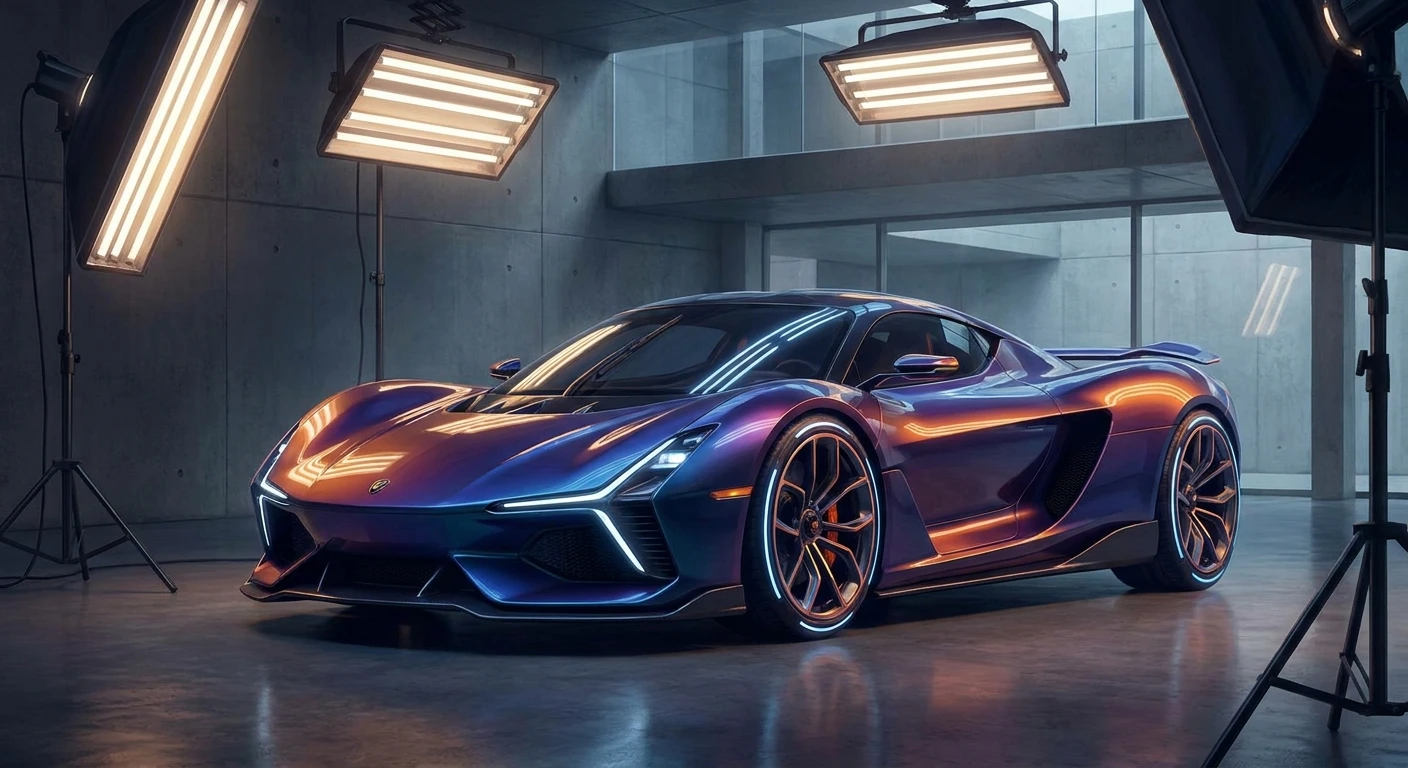
Breaking Down the Aston Martin Valhalla Price
You want a mid-engine hypercar steeped in Formula 1 technology, and you are staring directly at the British brand’s latest mechanical masterpiece. Securing an allocation for such an exclusive machine requires understanding exactly what you are paying for. The Aston Martin Valhalla price sits comfortably in the upper echelon of the luxury automotive market, demanding roughly $800,000 depending on final specifications, taxes, and bespoke customizations. This figure represents a drastic shift in high-performance engineering, completely leaving behind the traditional front-engine grand tourer layout that defined the manufacturer for nearly a century.
This massive investment secures a vehicle bridging the gap between a track-only weapon and a usable streetcar. You are looking at a plug-in hybrid architecture paired with a flat-plane crank V8 engine, advanced aerodynamics, and a carbon fiber tub that keeps the chassis incredibly rigid. The cost reflects not just raw speed, but the immense research, testing, and integration of cutting-edge telemetry straight from the highest tiers of motorsport. By the end of this guide, you will know exactly why the market commands this premium, how the technology functions, and what the ownership journey demands.
Read also: Yangwang U9: Ultimate Electric Supercar Performance Guide; Apollo Evo Price: The True Cost of the Hypercar.
What You Get for the Cost: Value Proposition
When analyzing high-end hypercars, the initial sticker shock quickly fades once you examine the raw materials and software integration required to keep the car on the road safely. The entry cost positions this model as a direct competitor to Maranello’s hybrid efforts and Woking’s electrified supercars, yet it retains a uniquely British aesthetic. The value proposition centers heavily on extreme scarcity and Formula 1 pedigree.
For example, the active suspension system actively communicates with the aerodynamic surfaces to keep the ride height optimal at 240 km/h. A second prime example is the bespoke front-axle electric drive, which allows for instant torque vectoring to pull the nose through tight corners with zero understeer. You are not just buying horsepower; you are purchasing extreme cornering capability.
| Hypercar Model | Powertrain Architecture | Estimated Starting Cost |
|---|---|---|
| Aston Martin Valhalla | 4.0L Twin-Turbo V8 + 3 Electric Motors | ~$800,000 |
| Aston Martin Valkyrie | 6.5L Naturally Aspirated V12 + Hybrid | ~$3,200,000 |
| Ferrari SF90 Stradale | 4.0L Twin-Turbo V8 + 3 Electric Motors | ~$524,000 |
Here are three core engineering reasons why the cost remains entirely justified for collectors and track enthusiasts:
- Full Carbon Fiber Monocoque: The entire central tub is baked in a high-pressure autoclave, ensuring maximum torsional rigidity while saving hundreds of pounds compared to aluminum platforms.
- E-Reverse Gearbox: To save weight, the bespoke dual-clutch transmission has no physical reverse gear. The car relies entirely on the front electric motors to back up, reducing mechanical complexity at the rear axle.
- Strictly Limited Production Run: The manufacturer committed to building only 999 coupe models globally, ensuring immediate exclusivity and protecting long-term depreciation curves.
History and Origins of the Mid-Engine Ambition
Origins: Project 003 and the Initial Vision
The journey to the final showroom model started under the internal codename “Project 003.” The original vision sought to create a direct successor to the Valkyrie (Project 001) that could actually be driven to the grocery store without requiring a pit crew. Early conceptual drawings focused heavily on extreme aerodynamics heavily influenced by Adrian Newey. The brand knew it needed a middle ground—a vehicle that offered face-distorting acceleration but possessed air conditioning, usable luggage space, and a suspension system that would not shatter spines on standard city streets.
Evolution: From In-House V6 to AMG V8 Power
Midway through development, the project faced a massive structural pivot. The original plan involved an entirely bespoke, in-house developed 3.0-liter turbocharged V6 engine. However, corporate leadership changes and a tightened partnership with Mercedes-Benz altered the trajectory. The engineering team realized that utilizing the highly proven AMG 4.0-liter twin-turbo V8, heavily modified with a flat-plane crank for higher revs, offered superior reliability, immense power, and better emissions compliance. This switch required redesigning the rear subframe, ultimately creating a wider, more aggressive rear stance.
Modern State: F1 Integration and Aerodynamic Finality
By 2024, the vehicle reached its final production form, heavily influenced by Lawrence Stroll’s acquisition of the company and the subsequent integration with the Aston Martin Formula 1 team. Two-time F1 World Champion Fernando Alonso actively participated in tuning the chassis dynamics, providing feedback on steering weight, brake pedal feel, and hybrid deployment strategies. The modern iteration features aggressive underbody venturi tunnels, pushing the limits of ground-effect aerodynamics while maintaining a sleek, elegant upper body profile free of massive, obnoxious rear wings.
Scientific and Technical Deep Dive
The Tri-Motor Plug-In Hybrid Architecture
The powertrain represents a masterclass in hybrid integration. The internal combustion engine alone revs past 7,200 RPM, delivering rapid throttle response thanks to the “hot-V” turbocharger placement. However, the internal combustion engine only tells half the story. The vehicle features three separate electric motors—two mounted on the front axle and one integrated directly into the transmission. This setup provides true four-wheel-drive capability. The front motors handle torque vectoring, independently varying the power sent to the left or right front wheel. This actively pulls the car toward the apex of a corner, completely neutralizing the inherent understeer usually found in heavy hybrid vehicles.
Active Aerodynamics and Downforce Generation
Generating grip at high speeds requires moving air intelligently. Rather than relying on a fixed rear wing that causes massive drag on straights, the engineering team utilized active aerodynamic surfaces. The front splitter articulates to manage airflow under the carbon fiber tub, feeding massive venturi tunnels that create a low-pressure zone beneath the chassis. This essentially sucks the car into the tarmac. The rear wing remains flush with the bodywork during low-speed driving and deploys automatically during heavy braking to act as an airbrake.
- Total System Output: Produces a combined output hovering around 1,012 metric horsepower, blending instant electric torque with high-RPM combustion power.
- Targeted 0-100 km/h: Expected to accomplish the sprint in roughly 2.5 seconds, heavily reliant on the all-wheel-drive traction off the line.
- EV-Only Range: A 400V battery system allows for approximately 15 kilometers of pure electric driving, perfect for quietly exiting residential neighborhoods early in the morning.
- Targeted Downforce: Generates up to 600 kilograms of aerodynamic downforce at 240 km/h, keeping the chassis perfectly planted through sweeping high-speed corners.
Actionable Plan: A 7-Step Guide to Hypercar Ownership
Step 1: Allocation and Dealership Outreach
Securing a unit is not as simple as walking into a local showroom with a blank check. You must contact an authorized dealer and submit a formal request for an allocation. The manufacturer prioritizes existing clients who already own limited-edition models or have a long history of purchasing flagship GT cars. Getting on the VIP list requires a solid relationship with the sales manager.
Step 2: Deposit and Financial Structuring
Once approved for an allocation, you will need to place a substantial non-refundable deposit. Given the high cost, many buyers utilize specialized exotic vehicle financing or structure the purchase through corporate entities or trust funds for tax efficiency. You must ensure liquidity is available months before the final build date.
Step 3: Q by Aston Martin Customization
This is where the process becomes deeply personal. You will fly to the factory or use a highly advanced virtual reality suite to configure the car through the ‘Q by Aston Martin’ bespoke division. You can choose paint-to-sample exterior colors, custom tinted carbon fiber weaves, specific interior leather stitching, and even customized seat padding tailored specifically to your body shape.
Step 4: Factory Tours and Build Tracking
During the 12 to 18-month waiting period, clients receive regular updates regarding their vehicle’s status on the assembly line. The manufacturer often invites future owners to tour the facility, watch the carbon fiber tub being baked, and see the hand-assembly of the AMG-derived engine.
Step 5: Delivery Preparation and Logistics
As the completion date nears, you must arrange specialized logistics. Most owners opt for enclosed, climate-controlled transport to bring the vehicle from the port or dealership directly to their home. You also need to finalize specialty hypercar insurance, which bases premiums on agreed-value rather than standard market depreciation.
Step 6: Paint Protection and Storage Solutions
Before putting a single mile on the odometer, ship the vehicle to a high-end detailing shop. You need full-body Paint Protection Film (PPF) and a ceramic coating to protect the incredibly expensive bespoke paint from rock chips and track debris. Additionally, prepare a climate-controlled garage equipped with a dedicated battery tender.
Step 7: Track Day Scheduling and Routine Maintenance
To truly experience what you paid for, book private track days. High-performance driving instructors can help you understand the limits of the downforce safely. Furthermore, adhere strictly to the maintenance schedule. Hybrid hypercars require precise fluid changes, telemetry updates, and tire replacements to maintain optimal performance.
Myths and Reality
Myth: The car is just a cheaper, watered-down Valkyrie.
Reality: The platform was engineered from the ground up to be a usable road car. While it shares the mid-engine philosophy, the V8 hybrid powertrain and carbon tub are entirely unique to this specific model, prioritizing daily usability over pure, unforgiving track times.
Myth: The hybrid system exists only to improve fuel economy.
Reality: The electric motors are deployed for extreme performance enhancement. They fill in the torque gaps during turbo spooling and provide aggressive front-wheel traction during hard launches. Any fuel savings are purely a secondary byproduct.
Myth: You can easily buy one slightly used at a discount.
Reality: Because production is strictly capped at 999 units globally, these vehicles rarely hit the secondary market immediately. When they do, flippers usually demand a premium over the original MSRP, meaning depreciation is nearly non-existent in the short term.
Myth: The car requires specialized racing fuel.
Reality: Despite the Formula 1 marketing connections, the engine is calibrated to run on premium unleaded pump gas (98 RON / 93 Octane), making road trips entirely feasible.
Frequently Asked Questions and Conclusion
What is the exact Aston Martin Valhalla price?
The base price hovers around $800,000, but heavily optioned models tailored by the Q division easily push the final invoice closer to the $1,000,000 mark.
How many units will be built?
The production run is strictly limited to 999 coupes worldwide.
Does it use a Mercedes engine?
Yes, it utilizes a heavily modified variant of the AMG 4.0L twin-turbo V8, specifically engineered with a flat-plane crankshaft for higher RPMs and a unique exhaust note.
Is the car fully street-legal?
Absolutely. Unlike track-only hypercars, it meets all global emissions and safety crash regulations, featuring a comfortable cabin, infotainment, and air conditioning.
What is the top speed?
The aerodynamic drag and gearing allow for an estimated top speed of 350 km/h (217 mph).
Can I drive it in full EV mode?
Yes, the front electric motors allow for roughly 15 kilometers of silent, zero-emission driving up to speeds of 130 km/h.
How does it compare to the Ferrari SF90?
Both are V8 plug-in hybrids, but the British offering focuses much heavier on extreme carbon fiber construction and F1-derived ground-effect aerodynamics, commanding a significantly higher premium.
Where is the car manufactured?
It is hand-assembled at the company’s high-tech manufacturing facility in Gaydon, Warwickshire, England.
Understanding the intricacies behind the cost reveals that this is far more than a luxury status symbol. It is a highly sophisticated piece of motorsport hardware engineered for the street. The blend of a high-revving V8, instant electric torque, and aggressive downforce justifies the extreme market positioning. If you are ready to secure your place in automotive history, contact your authorized dealership today to discuss remaining allocations and configuration options.