
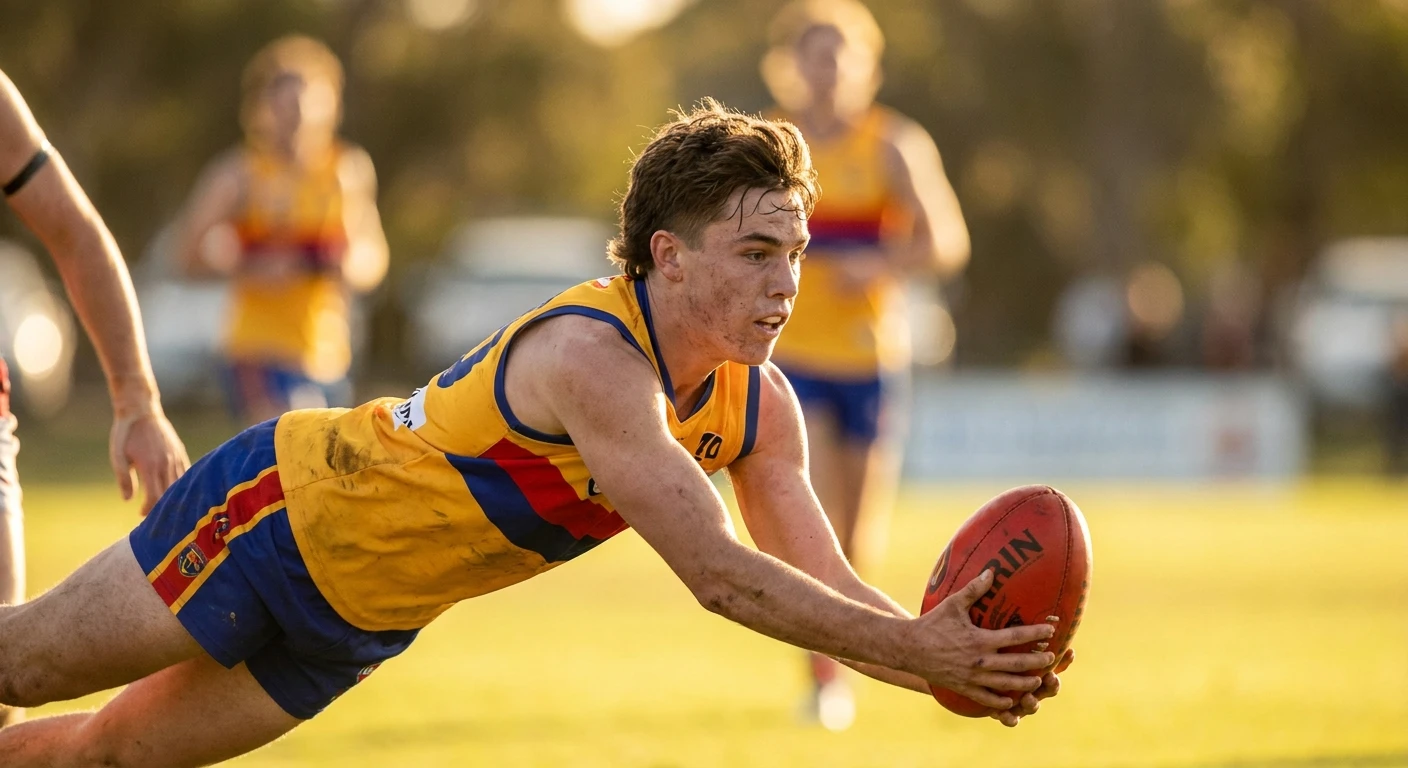
Levi Ashcroft: The Complete Athlete Breakdown
Let’s talk about Levi Ashcroft and the serious waves he continues to make in the highly competitive world of Australian rules football. If you follow the modern game, you already know that the midfield is an absolute war zone, requiring a unique blend of extreme endurance, rapid decision-making, and raw physical toughness. The name Ashcroft rings incredibly loud in AFL circles, and Levi Ashcroft carries that legacy forward with an exceptional mix of innate talent and relentlessly polished skill. We are looking at a dynamic player who doesn’t just participate in the game; he fundamentally orchestrates the flow of play. When evaluating top-tier athletic performance, understanding a player’s exact mechanics, mental processing, and developmental history offers a massive advantage to fans and aspiring athletes alike.
This comprehensive guide breaks down his entire athletic profile. We will unpack his foundational history, dissect the precise technical elements that elevate his disposal efficiency in heavy traffic, and even map out a football-specific training regimen modeled directly after elite midfield preparation standards. Whether you are an aspiring athlete analyzing footy mechanics, a coach looking for structural insights, or just an avid supporter wanting deeper tactical understanding, you need to grasp the mechanics of his game. Let us get straight into the details.
Read also: Josh Curran: Elite Athlete Training Guide; The Ultimate Guide to jack bostock and His Training.
The Core Mechanics of Midfield Dominance
Why does a player like Levi Ashcroft generate such intense focus among national recruiters and sports data analysts? It boils down to a rare combination of elite cognitive decision-making, exceptional disposal efficiency under immense physical pressure, and an innate ability to extract the football from heavily congested stoppage situations. You do not just stumble into dominance in the center square; it requires a specific set of highly refined attributes cultivated over thousands of hours of deliberate practice. Watching him navigate heavy traffic offers a pure masterclass in spatial awareness and poise.
For example, his ability to execute clean, rapid-fire handballs while absorbing aggressive tackles shifts the momentum of a match instantly. Instead of panicking and turning the ball over, he maintains a low center of gravity, keeping his arms free to distribute the pill to outside runners. Another prime example is his transitional running capacity. He consistently breaks defensive lines, connecting the defensive half with the forward 50-meter arc through sheer work rate and smart positioning. This two-way running heavily disrupts opposition defensive structures.
Here is a detailed breakdown of the core attributes that define this type of elite midfield profile:
| Player Attribute | Technical Description | In-Game Tactical Benefit |
|---|---|---|
| Clean Hands in Traffic | One-touch ground ball gets while under immediate physical pressure. | Maintains offensive flow, prevents costly turnovers, and feeds outside runners. |
| Endurance Base | High-level aerobic capacity allowing for continuous two-way running. | Outworks opponents in the critical fourth quarter and creates numerical advantages. |
| Advanced Footy IQ | Anticipating ball movement and opposition structures before they develop. | Allows for crucial intercept possessions and initiates high-scoring transition chains. |
| Core Stability | Maintaining balance and strength through the hips during physical contact. | Prevents being easily bumped off the ball, ensuring effective disposal execution. |
Beyond these specific attributes, the tangible impacts on the field are undeniable. When a player of this caliber is firing, the entire team dynamic shifts. Here are the key ways this skill set directly influences the outcome of a match:
- Consistently winning the crucial first possession at center bounces and boundary throw-ins, guaranteeing proactive rather than reactive team positioning.
- Maintaining absolute composure and executing precise, penetrating kicks inside the forward 50 to advantage leading forwards.
- Applying relentless defensive pressure, laying critical tackles, and forcing opposition errors when they attempt to exit their defensive zone.
- Providing a highly reliable link-up option during transition plays, ensuring smooth ball movement from half-back to half-forward without stagnation.
History and Origins
Early Origins and Family Legacy
The foundation of Levi Ashcroft and his footballing pedigree starts with a massive, undeniable family legacy. Growing up in a household where elite sports preparation is practically a daily religion sets an incredibly high baseline for development. His father, Marcus Ashcroft, built a legendary triple-premiership career with the Brisbane Lions, meaning this environment provided immediate, unfiltered exposure to professional standards from day one. From a very young age, the expectation was never just to play the game casually; it was to understand the underlying mechanics, the necessary sacrifices, and the dietary and recovery protocols required to succeed. Having a brother like Will Ashcroft also progressing through the exact same elite pathway creates a highly competitive but supportive crucible for rapid skill acquisition.
Evolution Through Junior Pathways
Transitioning into organized, high-level junior football, his developmental trajectory accelerated sharply. Competing in the premier elite talent pathways, particularly the Coates Talent League with the Sandringham Dragons, he consistently proved his exceptional mettle. He wasn’t just participating in these elite leagues; he was actively dominating matches against older, physically mature age groups. His standout performances for Victoria Metro in the national under-18 championships solidified his reputation across the country. During these tournaments, he accumulated massive disposal numbers, demonstrating an uncanny, almost magnetic ability to find the football regardless of the opposition’s heavy defensive tags or structural planning. The demanding school football system also played a massive role in honing his leadership qualities and tactical versatility on a weekly basis.
Modern State and Professional Demands
As he transitioned toward the professional sphere, the narrative naturally shifted from raw potential to actualized performance. The Brisbane Lions, holding crucial father-son selection rights, monitored every single phase of his junior development closely. The modern AFL environment demands extreme, almost superhuman physical conditioning. Entering this highly pressurized system, a young player must rapidly adapt to significantly faster ball movement, much heavier bodies crashing at the contest, and highly complex, rigorous tactical structures devised by veteran coaches. His current and ongoing phase involves fine-tuning these specific physical adaptations—building functional muscle mass without sacrificing his elite aerobic capacity—while strictly maintaining the instinctive flair and creativity that made him a standout junior superstar.
Scientific and Technical Deep Dive
Biomechanics of Elite Midfield Play
Let us look strictly at the sports science behind the movement. A top-tier midfielder like Levi Ashcroft relies heavily on highly efficient biomechanics to navigate heavily congested areas without injury. The center of gravity must remain exceptionally low to absorb high-impact collisions while simultaneously accelerating away from the stoppage. Kicking mechanics require perfect kinetic chain sequencing. This means seamlessly transferring mechanical energy from the planted foot, driving up through the hips and core, and snapping into the kicking leg. This precise sequencing ensures maximum distance and pinpoint accuracy without overexerting the quadriceps or hamstrings, which often leads to soft-tissue injuries. Furthermore, when analyzing his trademark quick handballs, the speed actually originates from rapid fast-twitch muscle fiber activation in the upper back and immense core stability, rather than just basic arm strength.
Tactical Spatial Awareness and Cognitive Load
Beyond the physical realm, the cognitive load placed on a modern AFL midfielder is absolutely immense. Elite spatial awareness involves constant, rapid scanning of the field, calculating multiple player vectors, and predicting the chaotic trajectory of the oval ball before it even bounces.
- Neuromuscular control: Allows for rapid, explosive changes of direction without losing balance, an essential trait for dodging tackles in the phonebooth-like confines of a center bounce.
- Aerobic glycolysis: Provides the sustained cellular energy necessary to cover up to 15 kilometers per match, ensuring the player does not fade into obscurity during the final term.
- Advanced proprioception: Ensures the athlete knows exactly where their body is in three-dimensional space, greatly aiding in highly contested marking situations against taller opponents.
- Visual tracking algorithms: Processed in the brain, allowing for exceptional peripheral vision, enabling those seemingly impossible no-look handballs to overlapping, running teammates.
- Lactic acid buffering capacity: Dictates how quickly muscles can recover from repeated, high-intensity sprint efforts, allowing the player to go from contest to contest without cramping.
Actionable Training Plan: The Midfielder’s Menu
Want to train like an elite draft prospect? This intensive 7-day football conditioning plan draws direct inspiration from the rigorous weekly schedules of top-tier midfielders. Listen, you must execute this with proper form and high intensity to see real results.
Day 1: Aerobic Engine Building
Focus purely on long-distance, sustained running. An elite midfielder needs a massive tank. Complete a 10km run at a steady, challenging pace (aim for around 4:30 to 5:00 minutes per kilometer). This session builds the critical cardiovascular base required to run out a grueling full four-quarter game without your heart rate maxing out too early in the match.
Day 2: Agility and Explosiveness
Incorporate sharp ladder drills, tight cone weaves, and short, aggressive 20-meter sprints. The primary goal here is to activate fast-twitch muscle fibers for sudden, explosive bursts away from stoppages. Perform 10 sets of 20-meter sprints from a standing start, allowing exactly 45 seconds of rest between each sprint to ensure maximum velocity on every single rep.
Day 3: Contested Ball Mechanics
Partner up for intensive ground-ball gets. Practice attacking the football at absolute top speed. Focus on maintaining a low center of gravity, scooping the ball cleanly, and immediately dishing off a sharp handball while a partner applies a realistic bump. Complete 50 repetitions on both the left and right sides to build total ambidexterity.
Day 4: Active Recovery and Mobility
Avoid heavy lifting and high impact. Engage in deep foam rolling, dynamic stretching, and light pool work. Walk in waist-deep water for 20 minutes to flush lactic acid from the legs. Flexibility and recovery are exactly what prevents devastating soft-tissue injuries during high-intensity matches. Do not skip this day under any circumstances.
Day 5: Kicking Efficiency and Targeting
Set up visual targets at 30, 40, and 50 meters. Practice hitting these targets while on the run, strictly focusing on a clean ball drop and a smooth follow-through to ensure optimal kinetic energy transfer. Take 100 kicks, ensuring you practice drop punts, penetrating kicks, and higher, looping passes designed for forwards to run onto without breaking stride.
Day 6: Match Simulation and Tactical Drills
Participate in high-intensity, small-sided games (for example, 5v5 or 7v7 structures). This localized chaos forces rapid cognitive decision-making, perfectly mimicking the high-pressure, claustrophobic environment of the midfield where space and time are strictly limited. Focus heavily on your defensive transitions the absolute second possession is lost.
Day 7: Rest and Cognitive Review
Total physical rest is absolutely paramount. Use this day to stay off your feet, watch professional match footage, analyze elite decision-making, and mentally prepare for the upcoming week’s physical load. Hydrate extensively and ensure you are hitting your macronutrient goals to rebuild broken-down muscle tissue effectively.
Myths vs. Reality
Let’s clear up some common, frustrating misconceptions surrounding high-profile footy prospects.
Myth: Father-son prospects have a remarkably easy, guaranteed ride into the AFL system.
Reality: The pressure is actually heavily magnified. They face intense, constant public scrutiny, relentless media comparisons to their fathers, and must still meet the exact same elite physical and mental benchmarks as every other draftee fighting for a list spot.
Myth: High disposal counts automatically guarantee a fantastic game.
Reality: It is strictly all about disposal efficiency and impact. Thirty ineffective, backward touches mean absolutely nothing compared to fifteen highly impactful, forward-half, score-involving disposals that break lines.
Myth: Midfielders only really need endless endurance, not upper-body strength.
Reality: Modern midfielders require significant, functional upper-body strength and rock-solid core stability to hold their ground at stoppages, break tackles, and physically impose their will on the contest.
Myth: Junior dominance automatically translates to immediate professional success.
Reality: The transition requires a complete physical, tactical, and mental rebuild to cope with the sheer speed, complexity, and brutal strength of mature, seasoned athletes.
FAQ & Conclusion
What position does Levi Ashcroft play?
He primarily operates as an elite midfielder, highly adept at playing both grueling inside (contested) and damaging outside (uncontested) roles.
Which junior club did he represent?
He dominantly played for the Sandringham Dragons in the highly competitive Coates Talent League.
Is he related to other professional AFL players?
Yes, he is the proud son of Brisbane Lions legend Marcus Ashcroft and the younger brother of dynamic midfielder Will Ashcroft.
What is his absolute primary strength on the field?
His advanced footy IQ, incredibly clean hands in heavy traffic, and exceptional, calm decision-making under severe physical pressure.
How does the father-son rule apply to him?
Because his father played well over the required 100 games for the Brisbane Lions, the club holds preferential bidding rights to secure him during the national draft process.
What makes him considered a top-tier elite talent?
His relentless consistency, massive two-way work rate, and unique ability to heavily influence the game both offensively and defensively.
How important is aerobic endurance for his specific role?
It is absolutely crucial. Modern midfielders must cover vast amounts of ground (often 13-15km) to continuously link play between the defensive and attacking arcs.
In conclusion, Levi Ashcroft clearly represents the absolute next generation of elite Australian rules football talent. His rare blend of immense pedigree, uncompromising work ethic, and surgical technical precision makes him a fascinating subject for any serious sports analyst or fan. Keep closely tracking his professional career, and if you truly want to elevate your own athletic game, start aggressively implementing the intense training principles outlined above today!