
Unlocking the Most Expensive School in Sydney: What Are You Really Buying?
If you are exploring the Most Expensive School in Sydney, you already know that elite education in Australia’s most dynamic city comes with a staggering financial commitment. Annual tuition fees for senior students at the pinnacle of Sydney’s independent school sector now routinely shatter the $45,000 AUD ceiling, and that is before accounting for boarding, uniforms, technology levies, and mandatory extracurricular expenses. But what exactly drives these monumental costs? The reality is that parents writing these checks are purchasing far more than just a standard academic curriculum. They are investing in a comprehensive lifestyle ecosystem, unparalleled networking opportunities, and facilities that rival those of small universities. Sydney’s eastern suburbs, north shore, and inner west are home to institutions that have spent over a century refining the art of premium education. From heritage-listed sandstone architecture to multi-million-dollar performing arts centers, the landscape of independent schooling here is breathtaking. This comprehensive guide breaks down exactly what you get when you enroll your child in the top tier of Australian education, stripping away the prestige to look at the tangible benefits, the rich history, the pedagogical science, and the step-by-step reality of securing a highly coveted enrollment spot.
The Core Value Proposition: Beyond the Price Tag
When evaluating what constitutes the ultimate premium education, you have to look past the raw numbers. The institutions topping the fee charts—ranging from exclusive girls’ schools in the eastern suburbs to sprawling boys’ boarding schools in the west—operate like high-performance corporate entities dedicated to youth development. They offer a value proposition built on exclusivity, resources, and individualized attention.
Read also: Discover Exactly How Old Is Deja Clark Right Now; Usher Concert Sydney: The Ultimate Guide.
Consider the tangible assets available to students. We are talking about Olympic-standard aquatic centers, professional rowing sheds located on prime Sydney Harbour real estate, and music conservatoriums staffed by industry professionals. Furthermore, the value extends deeply into the staffing. These schools aggressively recruit top-tier educators, offering remuneration packages well above standard teaching awards to secure HSC markers, published authors, and PhD-qualified subject matter experts. Let us break down the financial landscape of some of the city’s most notable premium institutions to give you a clear perspective.
| Elite Institution Profile | Estimated Annual Senior Day Fee (AUD) | Standout Campus Facility |
|---|---|---|
| SCEGGS Darlinghurst | $46,000+ | Urban architectural integration with advanced science labs |
| The King’s School | $44,000+ (Boarding extra) | 300-acre campus with commercial agricultural plots |
| Kambala (Rose Bay) | $45,000+ | Harbourside location with elite visual arts precinct |
| Cranbrook School | $44,000+ | State-of-the-art aquatic and fitness center |
So, what are the primary pillars that justify these exorbitant annual investments? Here is exactly what parents are paying for:
- Unrivaled Infrastructure: Access to commercial-grade technology, media studios, robotics laboratories, and sporting complexes that allow students to train and learn in environments mimicking professional industries.
- Elite Staffing and Lower Ratios: Class sizes are kept intentionally small, particularly in senior years. The student-to-teacher ratio often drops to single digits for specialized HSC subjects, ensuring highly personalized feedback and mentoring.
- The Lifelong Network: Perhaps the most unspoken but highly valued asset is the alumni network. Graduating from these institutions plugs young adults into a multi-generational web of industry leaders, politicians, and business executives, offering a massive advantage in early career placement.
Colonial Origins of Elite Education
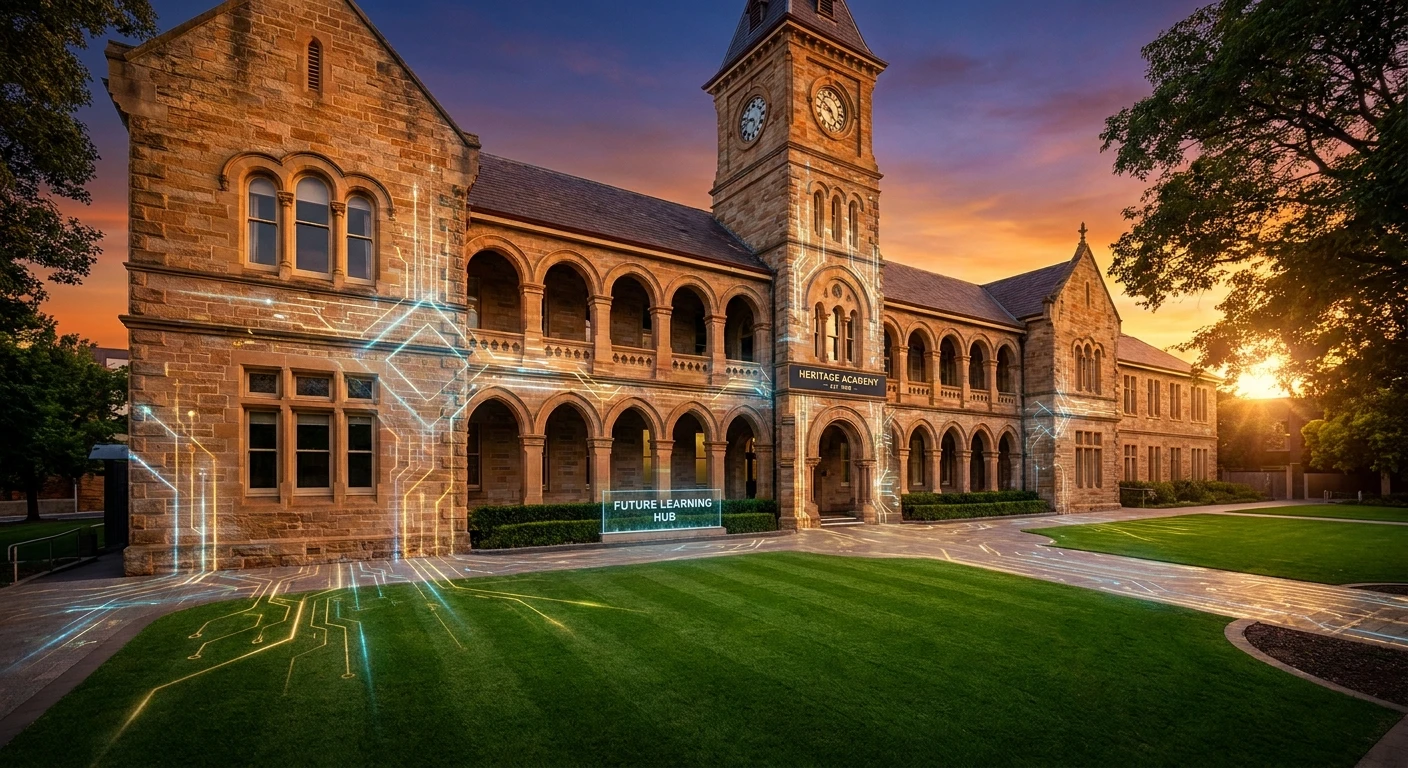
To truly understand the prestige surrounding the most expensive schools in Sydney, we must look back to their origins. Many of these institutions were established in the 19th century, heavily modeled on the British public school system. Early colonial leaders recognized the need to educate the children of the growing administrative and mercantile classes without sending them on a perilous sea voyage back to England. Schools like The King’s School, founded in 1831, were built to cultivate the next generation of political and social leaders. They adopted the classic House systems, the strict uniform codes, and the strong emphasis on muscular Christianity, discipline, and classical academics. The sandstone facades of these early buildings remain a powerful symbol of permanence and authority in the modern Sydney landscape.
The Evolution Through the 20th Century
As Sydney expanded and its economy boomed post-World War II, the demands on elite education shifted. It was no longer enough to offer Latin and rugby. The mid-to-late 20th century saw these heritage schools undergo massive physical and ideological transformations. They began acquiring surrounding residential properties to expand their footprints, building dedicated science blocks and modern libraries. The focus broadened to include comprehensive arts programs, debating, and a wider array of sports. This era also marked the beginning of intense inter-school rivalries, heavily publicized in local media, which further cemented their status as cultural powerhouses within New South Wales.
The Modern State of Premium Schooling
Today, the landscape is virtually unrecognizable from its colonial roots, despite the preservation of historical architecture. The modern premium school is a globally facing institution. They offer international exchange programs, dual curriculums including the International Baccalaureate (IB), and pathways directly into Ivy League and Oxbridge universities. The arms race for the best facilities has accelerated, with schools investing tens of millions of dollars into master plans designed by award-winning architects. They operate with sophisticated marketing departments, massive endowments, and alumni foundations that ensure their financial dominance and ability to offer unparalleled educational experiences.
Pedagogical Frameworks and Data-Driven Academics
Beneath the grand architecture lies a highly sophisticated, scientifically driven approach to pedagogy. The highest-priced schools do not rely on chance or natural talent alone; they engineer academic success through meticulous data tracking. From the moment a student enters the middle school, their cognitive development, reading comprehension, and mathematical proficiency are tracked using advanced educational software. This data allows teaching staff to identify micro-gaps in knowledge and deploy targeted interventions before a student ever falls behind. The integration of cognitive load theory and evidence-based teaching models ensures that the delivery of the NESA (HSC) syllabus is optimized for maximum retention and high-stakes exam performance.
Biomechanics and Professional-Grade Extracurriculars
The application of technical and scientific methodologies extends aggressively into the sporting and extracurricular arenas. These schools treat their athletic programs with the seriousness of professional franchises. Students participating in flagship sports like rowing, rugby, or athletics have access to elite conditioning staff, physiotherapists, and dietitians. The technology utilized on campus is nothing short of extraordinary.
- Algorithmic Performance Tracking: Custom-built dashboards that track a student’s academic trajectory, cross-referencing assessment marks to predict final ATAR outcomes with startling accuracy.
- Biomechanical Analysis Labs: Sports pavilions equipped with high-speed cameras and force plates to analyze and correct the biomechanics of rowers, fast bowlers, and track athletes.
- Acoustically Engineered Environments: Performing arts centers designed with variable acoustic technology, allowing the hall’s reverberation time to be tuned perfectly for either a full symphony orchestra or an intimate theatrical play.
- Enterprise-Grade Digital Ecosystems: Campus-wide, ultra-fast Wi-Fi 6 networks, comprehensive cybersecurity protocols, and cloud-based learning management systems that ensure seamless education whether the student is in the classroom or at home.
Step 1: Navigating the Waitlist from Birth
Gaining entry requires extreme foresight. For the most prestigious campuses, waitlists are notoriously long. Parents frequently register their children within weeks—sometimes days—of their birth. You must secure a copy of the birth certificate and immediately submit the non-refundable registration fee. Do not assume that sibling connections guarantee a spot; the demand far outstrips supply.
Step 2: Comprehensive Financial Preparation
With annual fees pushing $50,000 AUD, financial planning must begin years in advance. Sit down with a financial advisor to project the total cost of secondary schooling, factoring in annual fee increases of 3 to 5 percent. Establish dedicated education bonds or investment trusts to ensure that the liquidity is available when those hefty term invoices arrive.
Step 3: Conducting Strategic Campus Tours
Do not rely solely on glossy brochures. Attend the official open days, but also request a private tour on a regular school day. Observe the interactions between staff and students, assess the cleanliness of the facilities, and gauge the general atmosphere. This is your opportunity to verify if the school’s culture aligns with your family’s values.
Step 4: Assessing Scholarship and Bursary Options
Even wealthy families explore scholarships. Most elite schools offer academic, music, and sometimes all-rounder scholarships that can cover up to 100 percent of tuition. Research the specific testing dates (usually held in February or March of the preceding year) and consider specialized tutoring to prepare your child for the highly competitive ACER or Edutest examinations.
Step 5: Preparing for the Admissions Interview
The interview is a critical hurdle. Schools want to ensure that both the student and the parents are a cultural fit. Prepare your child to speak confidently about their hobbies, books they have read, and their areas of curiosity. As a parent, be prepared to articulate why you chose this specific institution and how you plan to contribute to the school community.
Step 6: Undergoing Academic and Cognitive Assessments
If applying for non-intake years, or as part of the general enrollment finalization, your child may need to sit for cognitive and academic benchmarking tests. These are not necessarily pass/fail exams but are used by the school’s administration to place the student in the correct academic streams and allocate necessary support resources.
Step 7: Finalizing Enrollment and Uniform Fittings
Once the formal offer is made, you must pay a substantial, non-refundable acceptance fee. Following this, you will be directed to the campus uniform shop. Be prepared for this initial outfitting to cost upwards of $1,500 AUD, as it will include formal blazers, sports kits, specialized equipment bags, and heavily branded accessories.
Separating Elite Schooling Myths from Reality
Myth: High fees automatically guarantee a 99.95 ATAR.
Reality: While premium schools provide unparalleled resources, expert tutoring, and optimal learning environments, absolute top-tier academic success still fundamentally requires the individual student’s hard work, focus, and natural aptitude. The school provides the ladder, but the student must climb it.
Myth: You must be a billionaire to attend these institutions.
Reality: While the demographics certainly skew extremely wealthy, a significant portion of the student body comes from dual-income professional families who prioritize education above all other discretionary spending, alongside a healthy cohort of scholarship and bursary recipients.
Myth: Elite schools teach a completely different curriculum.
Reality: Every school in New South Wales, regardless of its fee structure, must deliver the exact same NESA syllabus for the Higher School Certificate. The massive difference lies in the delivery methods, the breadth of elective choices, and the immense scaffolding of extracurricular support.
Myth: The culture is solely focused on ruthless academic competition.
Reality: Most modern premium schools have pivoted heavily toward holistic wellbeing. They employ full-time psychologists, emphasize pastoral care, and mandate community service, understanding that emotional intelligence is just as crucial as academic metrics.
Are boarding fees included in standard tuition?
No. If an institution offers boarding, those fees are entirely separate and can add an additional $25,000 to $35,000 AUD per year on top of the standard day tuition fees.
Do these schools follow the IB or HSC?
All of them offer the standard NSW Higher School Certificate (HSC). However, an increasing number of elite Sydney schools now offer the International Baccalaureate (IB) Diploma as an alternative pathway for globally minded students.
What is the typical student-to-teacher ratio?
While middle school classes might sit around 20 to 24 students, senior elective classes (Years 11 and 12) frequently drop to a ratio of 10-to-1 or even smaller for highly specialized subjects like Extension 2 Mathematics or languages.
Are extracurricular activities mandatory?
Yes, almost universally. Saturday sports are a compulsory element of the culture, and non-attendance without a medical certificate is often treated as a serious disciplinary breach.
How early should I register my child?
For the most historically significant and highest-performing schools, parents are strongly advised to submit waitlist applications within the first year of the child’s life.
Do these schools offer co-educational environments?
Sydney has a deeply entrenched tradition of single-sex education at the elite level. While there are a few prestigious co-educational options, the absolute most expensive tiers are heavily dominated by single-sex boys’ and girls’ schools.
Is the networking actually worth the cost?
For many families, absolutely. The alumni associations act as powerful professional networks, opening doors in law, finance, medicine, and politics that might otherwise take years to unlock independently.
Conclusion: Making the Ultimate Educational Investment
Deciding to enroll your child in the Most Expensive School in Sydney is about far more than just navigating eye-watering tuition statements. It is a calculated, strategic investment in world-class infrastructure, elite pedagogical framing, and a lifelong social network. While the financial burden is undeniable, the holistic developmental environment provided by these historic institutions remains largely unmatched. Take the time to tour the campuses, speak with the educators, and align your family’s goals with the school’s culture. Start planning your educational journey today to ensure your child secures a place in an environment where they can truly thrive.