
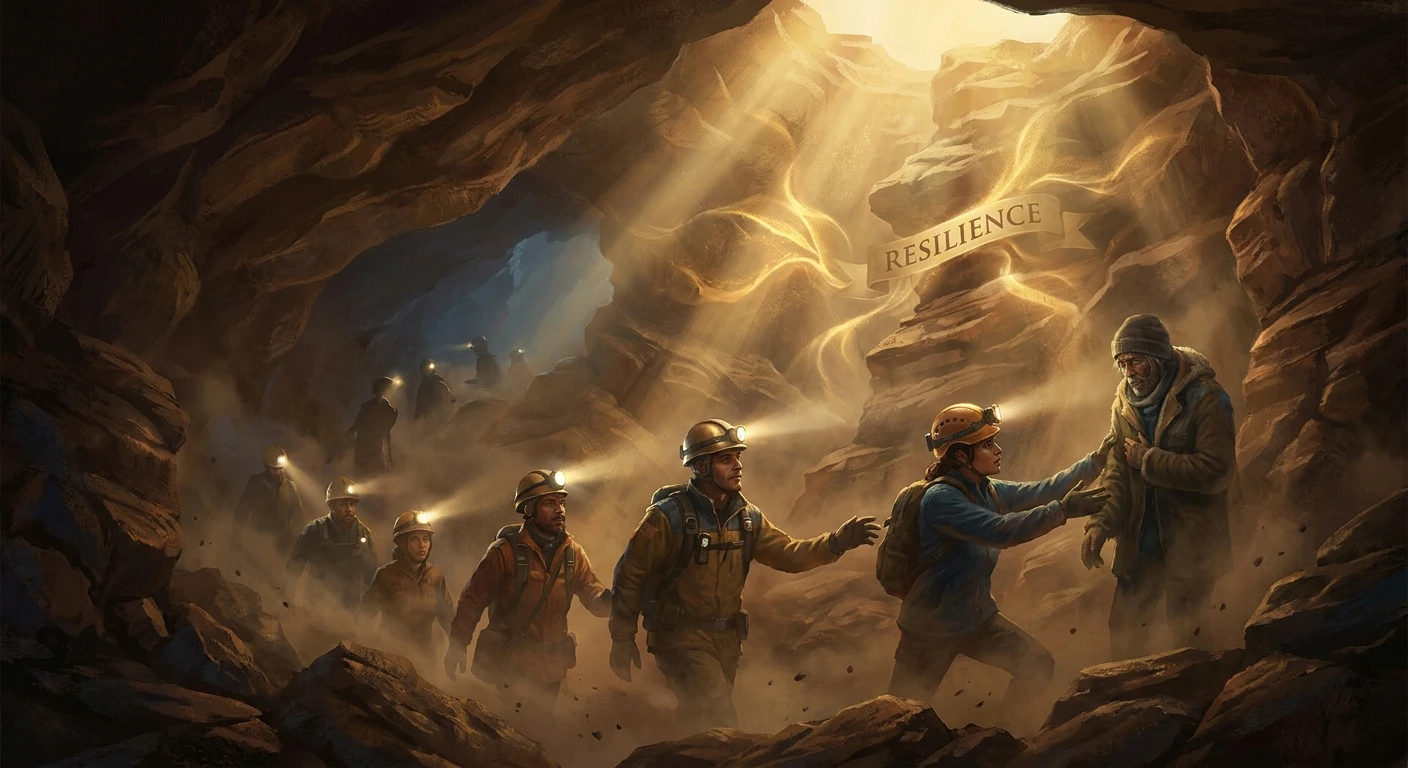
The Miraculous Survival of Todd Russell and Brant Webb
The story of Todd Russell and Brant Webb is one of incredible human resilience, testing the absolute limits of endurance and hope in the face of nearly impossible odds. Back in April 2006, the world collectively held its breath as news broke about a massive seismic event at the Beaconsfield gold mine in Tasmania, Australia. These two men were suddenly trapped nearly a kilometer underground, while their colleague tragically lost his life in the initial cave-in. The sheer willpower displayed by the trapped miners grabbed international headlines and sparked a massive, highly coordinated emergency response. You might remember watching the daily news updates on television, wondering how anyone could possibly survive in a cramped, pitch-black cage for 14 agonizing days. Their ultimate survival is not just a miracle; it serves as a masterclass in psychological endurance, extreme engineering, and raw human grit. The grueling ordeal forced rescue teams to innovate on the spot, combining heavy industrial mining machinery with incredibly delicate acoustic communication tools to find a way through the solid rock. Their eventual extraction fundamentally shifted global mining safety standards and emergency response protocols forever. By exploring the facts of this gripping historical event, you begin to understand the incredible mental and physical strength required to survive total isolation. The following breakdown covers everything from the initial collapse to the intricate, slow-motion rescue operation, detailing the precise strategies and technologies that eventually brought these two men back safely to the surface.
Understanding the Beaconsfield Mining Disaster
When the sudden seismic shift occurred, a massive rockfall completely devastated the lower operational levels of the Beaconsfield gold mine. The primary challenge facing emergency responders was not just locating the missing miners, but figuring out how to drill through incredibly hard quartzite rock without causing a secondary collapse that would crush the survivors. The immense value of the rescue effort relied heavily on extreme precision, rapid technological innovation, and unwavering psychological support for the men trapped below. For example, the psychological support provided via a narrow PVC pipe—sending down fresh food, letters from family, and even a digital music player—kept the men sane when the darkness threatened to overwhelm them. Another massive engineering success was the technical innovation of using a specialized raise borer machine, which prevented deadly vibrations from destabilizing the surrounding rock shelf.
Read also: What is a Critical Incident Response Team? Guide & Strategie; Surviving a Truck Crash: Everything You Need to Know.
| Rescue Phase | Primary Challenge | Innovative Solution |
|---|---|---|
| Initial Search | Locating any potential survivors buried under thousands of tons of fallen rock without visual confirmation. | Deploying highly sensitive seismic sensors and acoustic listening devices to detect faint tapping. |
| Sustainment | Keeping the trapped men alive, hydrated, and mentally nourished during the agonizingly slow drill process. | Carefully drilling a small PVC conduit to deliver specialized liquid diets, fresh water, and communication. |
| Extraction | Boring a wide enough escape tunnel without triggering a catastrophic secondary ceiling collapse. | Utilizing a slow, vibration-free raise borer excavation technique followed by manual hand-drilling. |
To fully grasp how they made it through, you have to look at the practical strategies employed by the miners themselves in the immediate aftermath of the rockfall. The key survival factors can be broken down into specific actions:
- Immediate tactical action: The men immediately took shelter in the small, reinforced metal basket of their telehandler vehicle, which shielded their bodies from the crushing weight of the collapsed ceiling directly above them.
- Strict resource rationing: Before rescuers made physical contact, they managed to sustain themselves on the tiny amount of contaminated groundwater they could reach and the meager supplies left in their work gear.
- Unyielding mental fortitude: They continuously used dark humor, constant conversation, and mutual reassurance to keep each other calm in the total darkness, actively staving off panic and despair.
The telehandler basket was incredibly cramped, roughly the size of a standard office desk, forcing the full-grown men to lie down in awkward, agonizingly cramped positions for two weeks. The ambient heat and humidity down in the shaft were stifling, making severe dehydration a constant, looming threat over the initial days of the disaster. Yet, despite being physically battered and emotionally pushed to the brink, they persevered through the nightmare.
The Origins of the Beaconsfield Mine
To understand the severity of the disaster, you need to look at the history of the Beaconsfield mine itself. Established during the late 19th-century Tasmanian gold rush, the mine was a historical powerhouse of wealth and local industry. It operated for decades before eventually closing down due to water inundation issues and economic shifts. However, the site was reopened in the late 20th century using modern pumping technology to access the deep, rich gold veins left behind. While the geological instability of the deep underground environment was a known factor to engineers, the sheer scale and violence of the 2006 seismic event were entirely unprecedented in the mine’s modern operational history.
The Evolution of the Crisis
The nightmare began on April 25, 2006, coinciding with the national Anzac Day public holiday. A localized 2.1 magnitude seismic event triggered a catastrophic rockfall deep within the active shaft. Tragically, this initial collapse resulted in the death of their seasoned colleague, Larry Knight. For several agonizing days, the surface crew had absolutely no sign of life from the depths, leading to grim assumptions about the fate of the remaining crew. It was only after specialized rescue crews deployed advanced thermal imaging cameras and highly sensitive acoustic sensors that they finally picked up a faint, rhythmic tapping response from the darkness, completely changing the trajectory of the mission from a body recovery to a frantic rescue.
Modern State of Mining Safety
Following the highly publicized, successful extraction of the trapped miners, the global mining industry heavily revised its emergency response frameworks. The disaster highlighted glaring vulnerabilities in deep-shaft operations. Consequently, the mandatory adoption of robust subterranean communication lines, hardened emergency shelters with independent air supplies, and far stricter geological monitoring protocols became standard across many jurisdictions worldwide. The enduring legacy of their survival is a fundamentally safer working environment for thousands of subterranean workers who step into the cage every single day.
The Geology of a Rockburst
If you want to understand the pure physics of the collapse, you have to look at the mechanics of a rockburst. When solid rock is subjected to immense pressure from tectonic forces, or from the continuous removal of surrounding material during excavation, it can explosively fail. The sudden stress redistribution around the deep mine workings causes violent, instantaneous fractures in the stone. The sheer kinetic energy released during the Beaconsfield rockburst was roughly equivalent to a massive subterranean explosion, instantly displacing thousands of tons of jagged debris and crushing heavy industrial machinery like tin cans.
Precision Drilling Technology
Once the survivors were finally located, the engineering team faced a massive dilemma: how do you get them out? Using traditional mining explosives was completely out of the question. The engineers ultimately employed a massive raise borer machine to slowly ream a rescue shaft. The technical execution was flawless but agonizingly slow. Here are the core scientific and technical facts surrounding the extraction:
- Acoustic sensing capabilities: Emergency responders used highly calibrated geophones to detect the incredibly faint tapping sounds coming from the trapped men, filtering out the ambient noise of the surrounding rock shifts.
- Raise borer mechanics: This specialized piece of machinery drills a small pilot hole first, and then a much larger reaming head is pulled back through, grinding the rock to fine dust without sending concussive shockwaves through the cavern.
- Extreme rock hardness: The surrounding subterranean quartzite rock had a massive compressive strength of up to 200 megapascals, making it incredibly difficult to penetrate without applying heavy, potentially dangerous force.
- Nutritional science in isolation: The initial liquid diet sent down the small PVC pipe was meticulously formulated by medical professionals to prevent refeeding syndrome, a highly dangerous metabolic complication that occurs when starving human bodies process heavy calories too rapidly.
Step 1 – Immediate Response and Structural Assessment
The exact moment the rockburst hit the lower levels, the surface site was immediately evacuated, and specialized search teams were rapidly deployed. Assessing the remaining structural integrity of the upper levels was critical to prevent further casualties among the initial responders heading into the dust.
Step 2 – Acoustic Search Protocols
With visual confirmation impossible, crews began deploying geophones and military-grade listening devices to pick up any signs of life. Hearing the faint, rhythmic tapping through the solid rock finally proved that someone had miraculously survived the initial crush.
Step 3 – Establishing the Lifeline
Rescuers managed to drill a narrow, 90mm hole through the rock to reach the men. This tiny conduit was used to deliver fresh water, specialized nutritional fluids, and a physical communication line. Establishing this direct link was the absolute turning point for the miners’ plummeting morale.
Step 4 – Psychological Stabilization
With the physical lifeline secured, the focus shifted to keeping the men mentally sharp. The surface crew began sending down digital music players, letters from desperate family members, and basic medical supplies to keep their minds engaged and hopeful during the long wait.
Step 5 – The Slow Bore Process
Engineers deployed the massive raise borer machine, cutting through the exceptionally hard quartzite rock at an agonizingly slow pace. The speed was heavily restricted to ensure the violent vibrations didn’t cause the shattered ceiling to collapse entirely on top of the survivors.
Step 6 – The Final Manual Dig
Because the heavy machinery could only safely go so far without risking a cave-in, rescue miners had to drop the heavy tools and use small hand tools to carefully chip away the final meters of rock. They operated in extremely tight, wet, and hazardous conditions, literally digging with their hands at the very end.
Step 7 – Surface Extraction and Medical Triage
After breaking through, responders pulled the men out of the hole, securing them in specialized rescue harnesses. They were brought to the surface and immediately transferred to awaiting medical teams equipped to handle potential light sensitivity, severe muscle atrophy, and psychological shock.
Debunking Common Myths
Myth: They were rescued within a few short days of the collapse.
Reality: They were trapped underground for an agonizing, continuous 14 days, enduring extreme physical discomfort and psychological strain before the rescue shaft was finally complete.
Myth: They had plenty of food and clean water from the very start.
Reality: For the first several days before surface contact was made, they survived strictly by licking groundwater moisture off the surrounding rocks and sharing a single leftover cereal bar.
Myth: The rescue was just a simple, straightforward digging operation.
Reality: It was actually one of the most complex, mathematically precise engineering feats ever attempted in modern emergency rescue history, requiring custom-built machinery to avoid a secondary cave-in.
Myth: They emerged completely broken physically and had to be carried out.
Reality: While undoubtedly weakened, both men astonishingly walked out of the mine cage under their own power and proudly clocked off using their standard work tags before accepting immediate hospital care.
How deep were they trapped underground?
They were trapped nearly one full kilometer (approximately 925 meters) below the surface, placing them under millions of tons of unstable rock.
Who else was involved in the initial accident?
Tragically, their highly respected colleague, Larry Knight, was killed instantly by the massive rockfall during the initial seismic collapse.
How long did they survive before rescuers made contact?
It took five grueling days of total isolation before the rescue team finally heard their tapping and established physical contact through a small drilled pipe.
What did they eat while waiting for the rescue tunnel?
Once the narrow lifeline was established, they initially received a medically formulated liquid diet, eventually progressing to solid food like customized sandwiches and fruit.
Why couldn’t they use standard explosives to reach them?
The geological instability surrounding the collapse zone was far too high. Any concussive blast from explosives would have immediately triggered further rockfalls, entirely crushing the survivors.
Did they suffer from long-term psychological trauma?
Both men have spoken very openly and honestly about the long-term mental health challenges, including severe PTSD, that followed their 14-day subterranean ordeal.
What happened to the Beaconsfield mine afterward?
The mine resumed heavily regulated, limited operations a few years later but eventually closed permanently in 2012 due to a combination of changing economic conditions and lingering safety factors.
Did they write a book about their incredible experience?
Yes, their incredible story has been documented extensively in authorized books and dedicated television specials detailing the complete timeline of the disaster.
The unprecedented survival of these two men remains a powerful testament to the human spirit’s ability to endure the unimaginable. It completely changed how the mining industry approaches disaster management and emergency engineering. Share this incredible story of survival with friends to keep the memory of this historic rescue effort alive!